How to Potty Train a American Bulldog Puppy
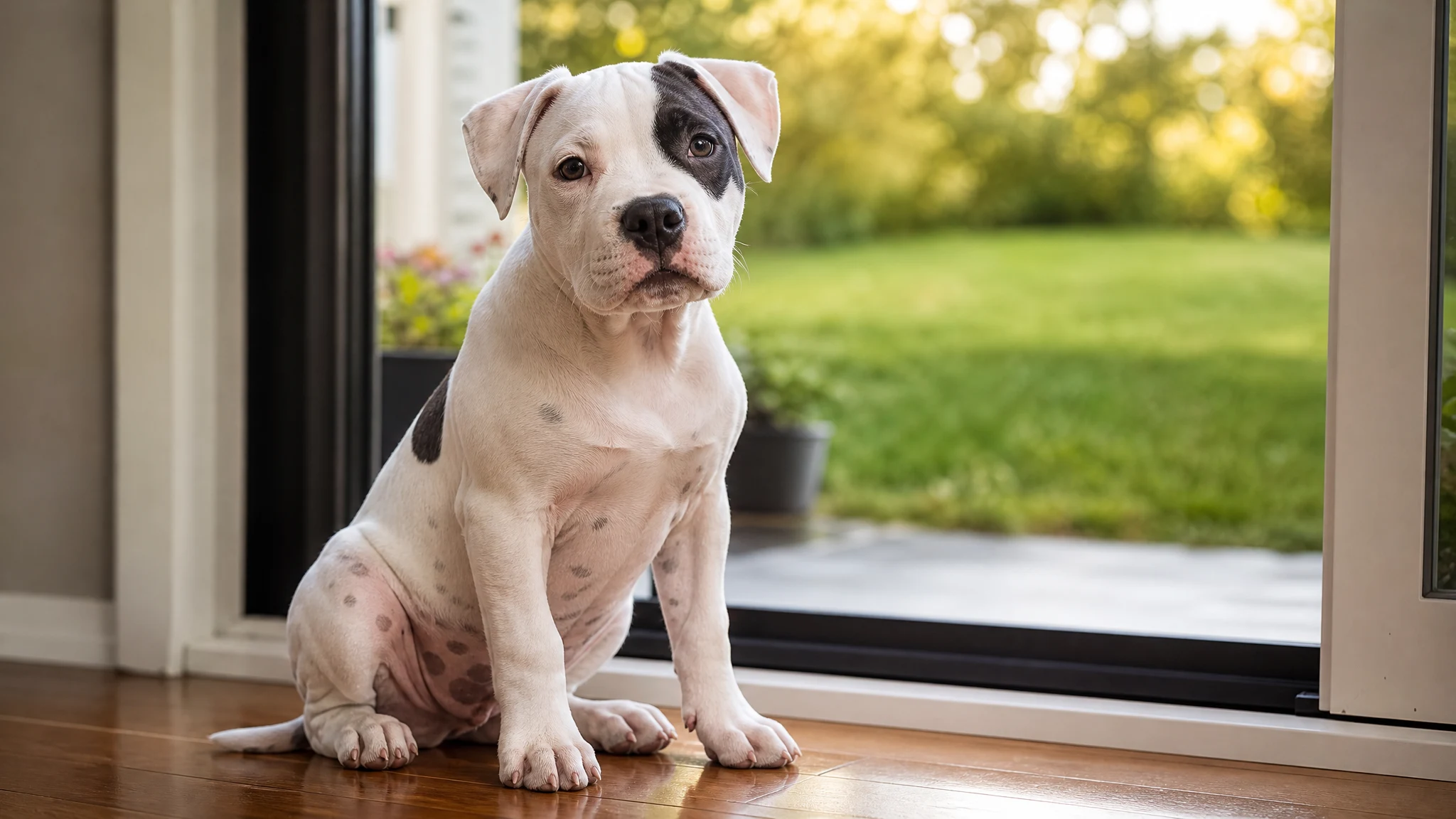
General training information. Every dog is an individual; for health or behavior concerns, see your veterinarian.
American Bulldog potty training is mostly about routine. Your puppy will not learn from a lecture or a scolding. Your puppy learns from a predictable day, lots of trips outside, and a reward every time the right thing happens in the right place.
This guide walks through house training a American Bulldog from the first day home. It covers what to gather, a schedule you can adapt, how to use a crate, what to do about accidents, and how long it usually takes. Every puppy is different, so treat the timelines as a rough map, not a promise.
Why potty training this breed takes planning
The United Kennel Club breed standard describes the American Bulldog as a gentle, loving family companion. A vet clinic, The Drake Center for Veterinary Care, describes the breed as eager to please and easy to train. That is encouraging, but it describes a general picture. Your puppy is an individual.
Size is the part that surprises new owners. The UKC standard lists mature males at 22 to 27 inches tall and mature females at 20 to 25 inches. Wikipedia gives a weight range of 60 to 119 pounds. A puppy headed for that size can turn a missed accident into a large puddle, and a fully grown dog is hard to move out of a bad habit. Getting the routine right early saves you work later.
The breed's history also matters. The UKC says American Bulldogs were farm working dogs, used to drive and catch cattle and to guard property. Hill's Pet notes that these dogs need about 60 minutes or more of physical and mental activity a day. A bored, under-exercised puppy tends to have a harder time settling into any routine, potty training included. Daily play and short training games help the whole plan.
What you need before the puppy comes home
- A crate sized so your puppy can stand, turn around and lie down. Because this breed grows large, many owners choose a crate with a divider panel so they can adjust the space as the puppy grows.
- A leash and a regular collar or harness for trips outside. Skip any tools that cause pain or fear.
- Small, soft treats your puppy loves, cut into pea-size pieces. Use a bit of your puppy's normal daily food if you want to keep calories in check.
- An enzyme-based cleaner made for pet accidents. Ordinary cleaners may leave a scent that draws your puppy back to the same spot.
- A chosen potty spot in your yard, ideally close to the door.
- A baby gate or playpen to keep your puppy in sight when out of the crate.
- A notebook or phone note to log meals, naps and potty trips for the first week or two.
- A cue word such as "go potty," picked in advance so everyone in the home uses the same one.
Step-by-step: how to potty train a American Bulldog
Step 1: Pick one spot and one routine
Choose a patch of yard and always walk your puppy there on leash. Stand still and stay quiet. The goal is a boring, focused visit. If you chat, play or wander, your puppy may forget the point.
Say your cue word once, calmly, as your puppy starts to go. Repeating it over and over just adds noise.
Step 2: Take your puppy out at the key moments
Young puppies cannot hold it for long, and the exact length varies from puppy to puppy. Ask your veterinarian how long yours can reasonably wait at the current age. In the meantime, go out at these times:
- First thing in the morning, before anything else
- Right after waking from any nap
- Shortly after every meal and drink
- After a play session or a burst of excitement
- Last thing before bed
- Any time your puppy sniffs the floor, circles or wanders off from the family
It is better to take your puppy out too often than not often enough. Every trip that ends in success is a rep that builds the habit.
Step 3: Build a simple daily schedule
A fixed feeding schedule makes potty times far easier to predict. Ask your veterinarian how much to feed and how often. Then build the day around those meals. Here is a sample pattern you can adjust to your own household:
- Wake up, go straight outside to the potty spot, reward.
- Breakfast, then outside again soon after.
- Short play or training time, then outside, then crate for a nap.
- Wake from the nap, outside right away, reward.
- Lunch, outside, supervised play, outside.
- Afternoon nap in the crate, outside on waking.
- Dinner, outside, family time, outside.
- Final trip before bed, then the crate for the night.
If your puppy wakes at night and whines, a short, quiet trip out is usually fair at the beginning. Keep the lights low, skip the play, and go straight back to bed. Your veterinarian can tell you when night trips can fade out for your particular puppy.
Step 4: Reward right away
The moment your puppy finishes, praise in a happy voice and hand over a treat. Timing is everything. A reward that arrives after you walk back inside teaches your puppy nothing about the potty spot.
After the reward, add a few minutes of play or a short walk. This keeps going outside a good thing and stops your puppy from learning that finishing quickly ends the fun.
Step 5: Use the crate as a rest spot
Dogs generally avoid soiling the place where they sleep, which is why a crate can help. It only works if the crate is the right size and your puppy is not left in it longer than is fair. Too much space lets a puppy use one end as a bathroom. Too long a stay means your puppy has no choice but to have an accident.
Make the crate pleasant. Feed some meals in it, toss in a treat now and then, and never use it as punishment. Take your puppy straight from the crate to the potty spot, every time.
Use the crate for naps, for short breaks when you cannot watch, and at night. When your puppy is awake and you are home, use a gate or playpen and keep your eyes on your puppy. Watching is how you catch the early signs and get outside in time.
One breed note from Hill's Pet: bones and joints in American Bulldogs can take up to 18 months to fully mature. Avoid having your puppy jump on and off furniture or leap out of a high crate door. Lift or guide your puppy where you can, and ask your veterinarian about safe activity for each stage.
Step 6: Handle accidents calmly
Accidents are part of the process. They are information, not misbehavior. When one happens:
- If you catch your puppy in the act, make a small, neutral interruption sound, then scoop up or lead your puppy outside. Reward if the rest finishes in the right spot.
- If you find it later, say nothing and clean it up. Your puppy cannot link a scolding to something that happened minutes ago.
- Clean the spot with an enzyme cleaner so the smell does not invite a repeat.
- Ask yourself what you missed. Was it too long since the last trip? Did you skip a trip after a nap or meal?
Never rub your puppy's nose in the mess, yell or physically punish. The American Veterinary Society of Animal Behavior (AVSAB) recommends reward-based training and cautions against punishment-based methods because they can cause fear and stress without teaching the right behavior. A frightened puppy often just learns to hide when going, which makes house training harder.
Step 7: Stretch the time gradually
After your puppy has gone several days with no accidents, begin to extend the time between trips and the amount of freedom inside the house. Open up one room at a time. If accidents return, go back a step. Backing up is not failure. It is how you find the pace that suits your puppy.
Step 8: Keep exposure to the world calm and positive
Hill's Pet advises building control in this breed through early socialization and neutral exposure, not suppression. The Drake Center adds that unsocialized dogs can become aggressive as adults and that the breed can be territorial. For potty training, this means your outdoor trips can double as calm practice. Let your puppy see new people and sights from a comfortable distance and reward relaxed behavior. Keep the potty visit itself quiet and focused.
The Drake Center also notes that American Bulldogs may not get along with other dogs, especially dogs of the same gender. Until you know how your puppy handles other dogs, avoid shared potty areas such as busy dog runs. Check with your veterinarian before taking a young puppy where other dogs have been, because vaccination timing matters.
How long does it usually take?
There is no single answer. Many puppies make good progress over a few weeks of steady routine, and many take a few months to be reliable. Some have slips well beyond that, especially during growth spurts, changes at home or exciting visitors. Size, age when you started, how consistent the household is and your puppy's own temperament all play a part.
Instead of counting days, watch the trend. Fewer accidents, longer comfortable stretches and a puppy who heads to the door or gives you a signal are all signs the plan is working. Results are never guaranteed, but a calm, consistent routine gives your puppy the best chance of getting there.
Common mistakes to avoid
- Giving too much freedom too soon. A big house is a lot of territory for a young puppy. Start small.
- Skipping the post-nap and post-meal trips. These are the most predictable moments, and the easiest to miss.
- Punishing accidents. It slows learning and can damage trust.
- Playing at the potty spot before your puppy goes. Save the fun for after.
- Changing the plan from person to person. Everyone in the home should use the same spot, cue word and schedule.
- Leaving the puppy in the crate too long. Arrange a midday visitor or helper if your day is long.
- Cleaning with ordinary household cleaners. Lingering odor can pull your puppy back to the same place.
- Ignoring the exercise side. With a breed bred for farm work, too little activity can show up as restlessness and a messy routine.
When to talk to your veterinarian
If your puppy suddenly starts having many accidents after doing well, strains, seems to be in pain, drinks far more than usual or passes anything that looks unusual, call your veterinarian. Health problems can look like a training problem. Your vet can check, and can also advise on feeding, schedule and activity for your puppy's age.
For hands-on help with a puppy that is not progressing, consider a certified trainer who uses reward-based methods. Ask about their approach before you book.
Quick recap
- Choose one potty spot, one cue word and one routine.
- Go out after waking, eating, playing and before bed.
- Feed on a schedule so potty times are predictable.
- Reward immediately after your puppy finishes outside.
- Use a right-sized crate for rest, and supervise when out of it.
- Treat accidents calmly, clean them with an enzyme cleaner and adjust the plan.
- Expand freedom slowly as accidents become rare.
- Keep up daily exercise, socialization and vet check-ins.
American Bulldog potty training rewards patience. A big, loving dog who goes outside on cue is worth the effort of those first weeks.