American Bulldog Training for New Owners
American Bulldogs were bred for farm work, and the UKC standard calls them gentle, loving family companions. Here is how to build manners, social skills and calm habits with rewards, starting early.
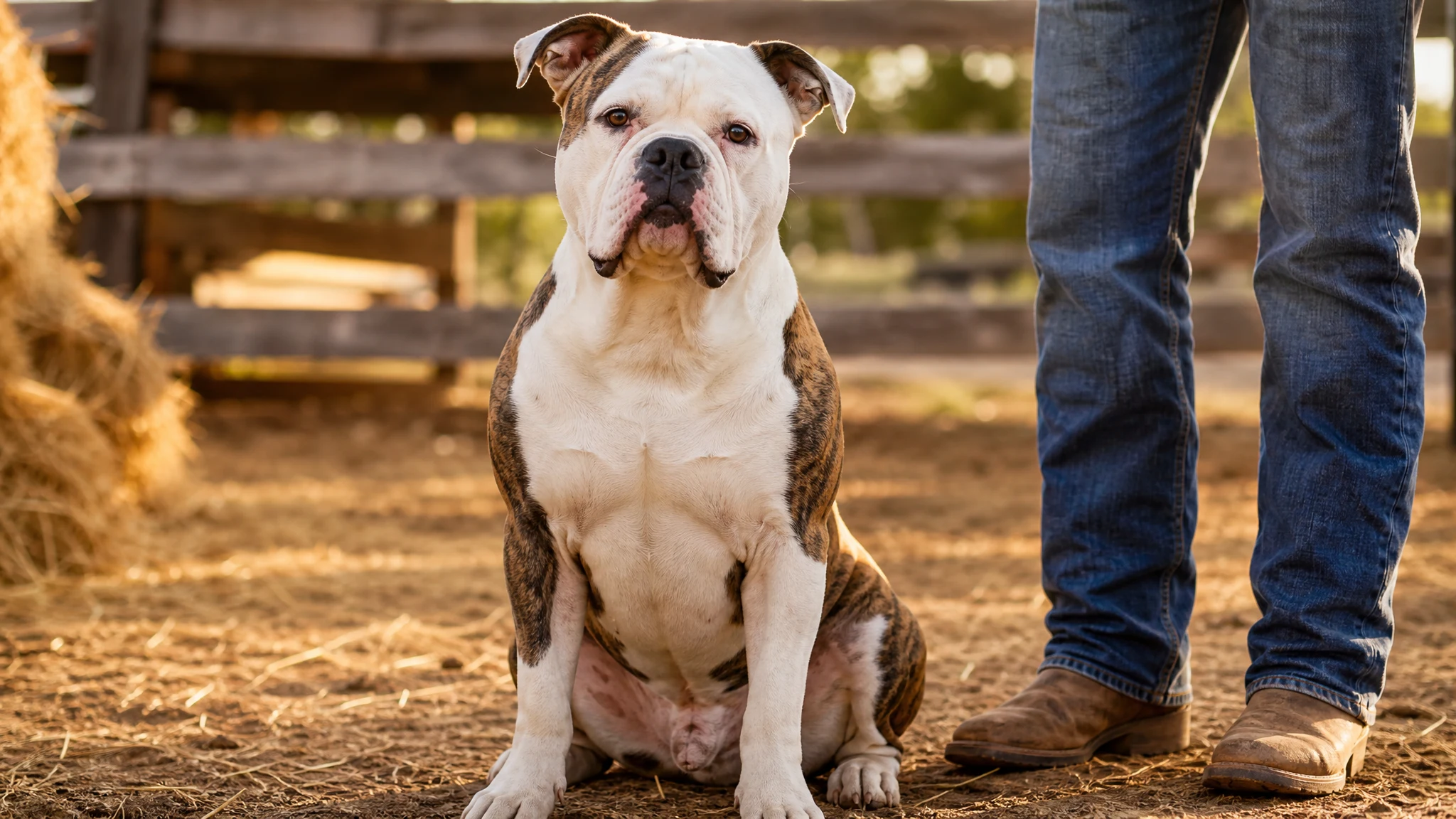
The American Bulldog at a glance
From the AKC breed page and the national breed club, as they state it.
| Origin | United States; ancestors were working bulldogs brought to the British North American colonies source |
| Bred for | Farm working dog: driving and catching cattle, guarding property source |
| Height | Mature males 22 to 27 inches, mature females 20 to 25 inches (UKC standard) source |
| Weight | 60-119 lb per Wikipedia; the UKC standard gives no numeric weight, only 'in proportion to height' source |
| Life expectancy | 10 to 12 years (Hill's); 10-13 years (Drake Center vet clinic) source |
| Trainability | Described as eager to please and easy to train (vet clinic wording, not an AKC rating) source |
| With children | Patient with children when raised with them; supervision always recommended source |
| With other dogs | May not get along with other dogs, especially same-gender dogs source |
| Temperament | Gentle, loving family companion (UKC standard) source |
American Bulldog Training Guides
Practical, reward-based guides for the first months and beyond, written for owners who want good habits from the start.
Puppy
From the first night home to adolescence: a American Bulldog puppy's training.
Training basics
Potty, crate and leash training, written for American Bulldogs.
- Are American Bulldogs Easy to Train? Temperament and Trainability FAQ
- Leash Training a American Bulldog: Pulling, Lunging and Loose-Leash Walking
- Crate Training a American Bulldog and Preventing Separation Anxiety
- How to Potty Train a American Bulldog Puppy
- How to Train a American Bulldog: The Complete Guide
Behavior
The American Bulldog problems owners ask about most, and the instincts behind them.
Exercise and jobs
How much a American Bulldog needs to do, and the sports and work the breed was made for.
American Bulldog health screening
Tests the breed's club and OFA recommend for breeding dogs. Ask a breeder for results.
| Health issues the club notes | issue: Hip and elbow dysplasia; source url: https://www.hillspet.com/dog-breeds/american-bulldog; source name: Hill's Pet breed guide (secondary); retrieved: 2026-10-26; quote: Hip and elbow dysplasia are common in large breeds. | issue: Sunburn on pink skin; source url:… source |
American Bulldog Training Questions
Are American Bulldogs easy to train?
The Drake Center for Veterinary Care describes American Bulldogs as eager to please and easy to train. That is a vet clinic's description, not a promise for your dog, and individuals vary. Short, reward-based sessions with treats, praise and play work well, and consistency at home matters more than any single trick.
How important is early socialization?
Hill's Pet advises building control through early socialization and neutral exposure rather than suppression. The Drake Center warns that unsocialized American Bulldogs can become aggressive as adults. Introduce your puppy to new people, places and sounds calmly, pair them with treats, and ask your veterinarian which outings are safe before vaccinations are complete.
Will my American Bulldog get along with other dogs?
The Drake Center says American Bulldogs may not get along with other dogs, especially dogs of the same gender. Plan introductions on neutral ground, keep early meetings short, and reward calm behavior. If your dog shows tension around other dogs, a reward-based trainer or veterinary behaviorist can help you plan next steps.
How much exercise does an American Bulldog need?
Hill's Pet lists about 60 minutes or more of physical and mental activity each day. Mix walks with sniffing games, food puzzles and short training sessions. Hill's also notes bones and joints can take up to 18 months to mature, so ask your veterinarian how much impact exercise suits a growing puppy.
Which training tools and methods should I use?
The American Veterinary Society of Animal Behavior supports reward-based training. Stay away from shock, prong and choke collars, alpha rolls, scruffing and dominance methods. Reward the behavior you want with treats, toys and praise, and keep sessions short and upbeat. For a hands-on plan, look for a trainer who uses rewards only.
General training information. Every dog is an individual; for health or behavior concerns, see your veterinarian.