How to Train a American Bulldog: The Complete Guide
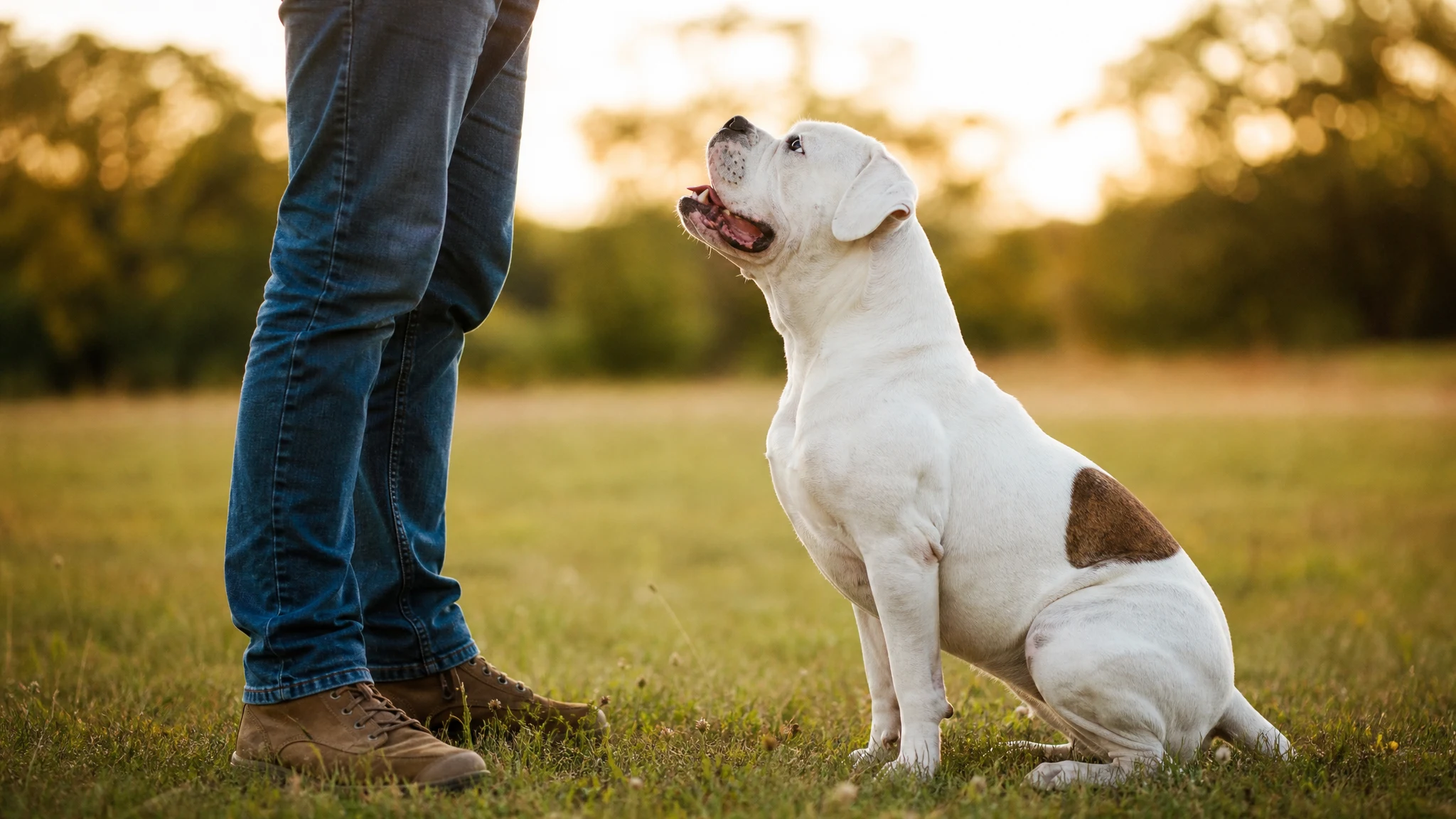
General training information. Every dog is an individual; for health or behavior concerns, see your veterinarian.
American Bulldog training starts with understanding what you are living with. This is a strong, farm-bred dog with a loving streak and a job-shaped brain. Train with that in mind and you get a steady, affectionate companion. Ignore it and you get a big dog making its own decisions.
This guide covers what the breed was made to do, how that shapes your plan, the stages from puppy to adult, the rewards that work, how much exercise and mental work to offer, and the challenges to plan for. It is written for people who want to know how to train a American Bulldog with patience, not force.
In this guide
- What the American Bulldog was bred to do
- Know your dog: size, temperament and growth
- Training stages from puppy to adult
- Motivation that works for this breed
- Exercise and mental work
- Challenges to plan for
- A simple weekly plan and common mistakes
- Sources
Key takeaways
- The breed began as a working farm dog that drove and caught cattle and guarded property, so expect strength, drive and a protective streak.
- The United Kennel Club standard describes the temperament as a gentle, loving family companion, and one vet clinic describes the breed as eager to please and easy to train.
- Socialization is the core of the plan. Hill's Pet advises building control through early socialization and neutral exposure, not suppression.
- Plan for about 60 minutes or more of physical and mental activity a day, according to Hill's Pet.
- Joints can take up to 18 months to mature, so keep early exercise sensible and ask your veterinarian about it.
- Use reward-based methods only. Shock, prong and choke collars, alpha rolls and dominance tactics have no place in this plan.
What the American Bulldog Was Bred to Do
Every good training plan begins with the dog's history. Wikipedia notes that the American Bulldog's ancestors were working bulldogs brought to the British North American colonies, and that the breed developed in the United States.
The United Kennel Club breed standard gives the original purpose as farm work: driving and catching cattle and guarding property. Wikipedia lists similar working roles, including farm guardians, stock dogs and catch dogs.
The United Kennel Club recognized the breed on January 1, 1999, and lists it in its Guardian Dog Group. Wikipedia says the American Kennel Club added the breed to its Foundation Stock Service in November 2019. If registration matters to you, check with each registry for its current rules.
How a working past shapes training
A dog made to catch cattle and watch a farm is built to act, not to wait. That does not make every American Bulldog a handful. Individual dogs vary a great deal. But it helps to read the breed's history as a set of questions your training should answer:
- Physical power. A dog bred to catch stock can pull hard and jump up with force. Manners like loose-leash walking and four paws on the floor matter more with a dog this strong.
- Guarding background. The Drake Center for Veterinary Care lists territorial behavior among the breed's challenges. Teaching your dog how to meet visitors calmly is part of the job from day one.
- Need for a job. A dog bred for farm work usually does better with structure and tasks than with long stretches of nothing. Training games, carrying things, and food puzzles all give the mind work.
None of this is a reason to be afraid of the breed. It is a reason to start early, stay consistent and keep your methods kind.
Know Your Dog: Size, Temperament and Growth
You train better when you know what is normal. Here is what the sources say about the breed.
Size and lifespan
The United Kennel Club standard gives mature males a height of 22 to 27 inches and mature females 20 to 25 inches. It describes weight only as in proportion to height. Wikipedia gives a range of 60 to 119 pounds.
For lifespan, Hill's Pet lists 10 to 12 years, and The Drake Center for Veterinary Care lists 10 to 13 years. Sources differ a little, which is normal. Your veterinarian can talk about your own dog.
That size is why training cannot wait. A 15-pound puppy that jumps on guests is funny. A 90-pound adult doing the same thing is a problem.
Temperament
The United Kennel Club standard calls the breed a gentle, loving family companion. The Drake Center describes the dogs as eager to please and easy to train. Hill's Pet says they are patient with children when raised with them, and recommends supervision at all times.
The same sources flag the other side. The Drake Center says unsocialized dogs can become aggressive as adults and that the breed may not get along with other dogs, especially same-gender dogs. A willing, affectionate dog and a dog that needs careful social management can be the same dog. Both descriptions are worth taking seriously.
Slow-maturing joints
Hill's Pet says bones and joints can take up to 18 months to fully mature. Hill's also lists hip and elbow dysplasia among the breed's common health issues. That has a direct effect on training: avoid repetitive hard jumping and long forced runs for a young, growing dog, and ask your veterinarian what is safe at each age.
Training Stages from Puppy to Adult
Good American Bulldog training tips are mostly about order. Teach the right things at the right time, keep sessions short, and end on a win.
Stage 1: The first weeks home
Your goals are simple: a safe routine, a house-training rhythm, and happy first experiences.
- House training. Take your puppy out after sleeping, eating, drinking and play. Reward right where you want them to go.
- Crate and rest. Teach the crate as a comfortable place with chews and treats. Never use it as punishment.
- Handling. Touch paws, ears, mouth and collar area gently, then reward. A strong adult dog needs to be easy to groom and examine.
- Name and eye contact. Say the name, then reward when the puppy looks at you. This becomes your attention cue later.
Stage 2: Socialization and early manners
Hill's Pet says to build control through early socialization and neutral exposure, not suppression. In practice, neutral exposure means your puppy sees new people, surfaces, sounds, dogs and places and learns that none of it needs a big reaction.
Keep it calm and low pressure:
- Let the puppy watch from a distance and reward calm looking.
- Do not force greetings. Let your puppy choose to approach, and let them leave.
- Meet friendly, vaccinated adult dogs one at a time in controlled settings. Ask your veterinarian when it is safe to begin.
- Practice meeting strangers with all four paws on the floor. Ask guests to ignore the puppy until it settles.
Because the Drake Center warns that unsocialized dogs can become aggressive as adults, treat this stage as the most important investment in the whole plan.
Stage 3: Core cues
Teach these in short sessions of a few minutes, several times a day:
- Sit and down. Lure with a treat, then reward the position.
- Come. Make it the best word the dog knows. Reward generously and never call your dog to scold them.
- Leave it. Reward the dog for turning away from something interesting.
- Wait at doors. Reward the pause before going through. A strong dog bolting out a door is a safety risk.
- Loose-leash walking. Stop when the leash tightens, move on when it slackens, and reward the dog for staying beside you. A well-fitted flat collar or a front-clip harness can help. Never use a prong, choke or shock collar.
- Place or mat. Teach the dog to settle on a mat. This is your tool for visitors and meals.
Stage 4: Adolescence
Adolescence is where many owners feel their progress slip. A young dog may seem to forget cues, test boundaries or get easily distracted. This is common in dogs generally, and it is not a reason to get tougher.
Go back to basics. Lower the difficulty, raise the reward value, and practice in more places. Keep using management tools too, such as leashes, gates and supervised time with visitors.
Remember the joint timeline from Hill's Pet. Even if your dog looks like an adult, the skeleton may still be developing. Keep exercise steady and avoid hard impact until your veterinarian is happy with it.
Stage 5: Adulthood
An adult American Bulldog benefits from a refresher routine. Keep rewarding good behavior, keep practicing calm behavior around other dogs and visitors, and keep giving the dog something to do. You can also add skills like:
- Reliable recall with distractions
- Calm waiting while another dog passes
- Settling at the vet or groomer
- Carrying or fetching simple items
Training never ends, but it gets easier. A dog with a solid foundation can learn new skills quickly.
Motivation That Works for This Breed
The Drake Center describes the breed as eager to please. That is good news for reward-based work. Your job is to give the dog clear information and reasons to repeat the right behavior.
This approach matches the position of the American Veterinary Society of Animal Behavior, which supports reward-based training and advises against punishment-based methods.
Rewards to use
- Food. Small, soft treats work well for fast repetition. Use part of your dog's daily food for training so extra treats do not add up. Ask your veterinarian about portions and weight.
- Play. Tug and fetch can be strong rewards for dogs that enjoy them. Teach a clear "drop" and "take it" so play stays safe with a powerful dog.
- Praise and touch. Many dogs enjoy a calm voice and a scratch. Use these along with food.
- Real-life rewards. Going outside, getting the leash on, or greeting a friend can all be rewards for a sit or wait.
Techniques that fit
- Mark and reward. Use a clicker or a short word like "yes" at the exact moment of the right behavior, then deliver the treat.
- Keep it short. Five minutes done well beats twenty minutes of frustration.
- Raise criteria slowly. Add duration, distance and distractions one at a time.
- Reward calm. Catch the dog lying quietly and reward it. Dogs repeat what pays.
- Redirect. If your dog grabs a shoe, trade for a chew rather than chasing.
What to skip
Do not use shock, prong or choke collars. Do not use alpha rolls, scruffing, staring contests or other dominance methods. They damage trust and can raise stress and fear. Those risks are a poor trade for any dog, and a strong, guarding-type dog is not a good candidate for them. Hill's Pet also advises against trying to suppress behavior and instead recommends building control through socialization.
If your dog growls, stiffens or snaps, do not punish the warning. Growling is information. Back off, create distance, and contact your veterinarian and a qualified, reward-based trainer or behavior professional for help.
Exercise and Mental Work
Hill's Pet puts the breed's needs at about 60 minutes or more of physical and mental activity a day. Notice that it counts both. A dog that is physically tired but mentally bored can still get into trouble.
Physical activity
- Walks. Daily walks give exercise and social exposure. Vary the route to add new smells and sights.
- Play sessions. Fetch and tug in a safe, fenced space burn energy. For a young dog, keep the surface forgiving and the jumping low.
- Controlled off-leash time. Only in a secure area, and only when recall is reliable.
- Heat awareness. Short-faced and heavy-bodied dogs can struggle in heat, and Hill's Pet notes sunburn on pink skin as a health concern. Walk in cooler hours, carry water and ask your veterinarian about sun protection.
Mental activity
- Food puzzles and snuffle mats. They turn a meal into a job.
- Scent games. Hide treats around a room and let the dog hunt.
- Trick training. Spin, target, go to mat, and back up all build focus and body awareness.
- Carrying and fetching tasks. A dog with a working past often enjoys having a purpose, such as bringing in a toy or carrying a light bag.
Dog sports and jobs
Wikipedia lists the breed's traditional working roles as farm guardians, stock dogs and catch dogs. For modern activities, the sources available do not list specific sporting events for the breed. If you are curious about a sport, check with the club or organization that runs it about current rules, eligibility and registration, and ask your veterinarian whether your dog is physically ready. Many dogs also enjoy simple home-based games without any competition.
Challenges to Plan For
Honest training means naming the hard parts. Here are the main ones, drawn from the veterinary and breed sources.
Other dogs
The Drake Center says the breed may not get along with other dogs, especially same-gender dogs. If you already own a dog or plan to add one, think carefully about the pairing and introduce them on neutral ground. Never leave new dogs unsupervised together. A qualified reward-based behavior professional can help you plan if there are early signs of tension.
For everyday life, that means careful management on walks: keep distance from unknown dogs, avoid crowded dog parks if your dog is uneasy, and reward calm behavior when another dog is in view.
Territorial behavior
The Drake Center lists territorial behavior among the breed's challenges. Teach a calm routine for the doorbell:
- Say the cue for "place" when the bell rings.
- Reward the dog for going to the mat and staying.
- Let the guest in only when the dog is settled.
- Reward again for quiet behavior while the guest is present.
Use gates or a leash when guests arrive until the routine is solid. Secure fences and gates matter too, since a strong dog guarding its yard needs reliable barriers.
Children
Hill's Pet describes the breed as patient with children when raised with them, and it recommends supervision at all times. Teach children to be calm, to avoid hugging or climbing on the dog, and to leave it alone when eating or resting. Dogs of this size can knock small children over even in play, so supervise closely.
Strength and pulling
A strong dog that pulls is hard to walk and hard to control. Start leash skills early, use plenty of rewards, and practice in quiet places before busy ones. A secure harness or well-fitted flat collar and a sturdy leash are enough. If you need more control, a trainer using reward-based methods can show you how to build it.
Health matters that affect training
Health questions belong with your veterinarian. Some conditions mentioned in the sources can affect behavior and training plans:
- Hip and elbow dysplasia. Hill's Pet and The Drake Center list these. Talk to your vet about screening and what exercise suits your dog.
- Skin concerns. Hill's Pet lists sunburn on pink skin, and Wikipedia lists allergic skin disease and ichthyosis. Wisdom Panel describes ichthyosis as inherited, autosomal recessive and juvenile in onset, and offers a commercial genetic test for it.
- Neuronal ceroid lipofuscinosis (NCL). Wikipedia lists this among the breed's conditions.
Sudden changes in behavior, such as new irritability, reluctance to move or refusing to jump, can have a physical cause. Book a veterinary visit before assuming it is a training problem. If you are choosing a puppy, ask the breeder what health evaluations the parents have had, and check what current screening tests are available for the breed with your veterinarian.
Unsocialized adults
The Drake Center warns that unsocialized dogs can become aggressive as adults. If you are adopting an adult with an unknown history, go slowly. Give the dog space, keep greetings controlled, and work with a veterinarian and a qualified reward-based behavior professional if you see fear or aggression. Avoid anyone who recommends harsh corrections.
A Simple Weekly Plan and Common Mistakes
Structure helps. Here is a plan you can adapt to your dog's age, health and schedule. Your veterinarian can help adjust it.
Sample week
- Daily: Two or three short training sessions, one or two walks, one food puzzle, and some calm time with a chew.
- Three days a week: A social outing to a quiet place, such as a park bench at a distance from other dogs, with treats for calm looking.
- Two days a week: A new skill or trick for fun.
- One day a week: A scent game or a new route, and a review of recall in a secure area.
Together this adds up to the roughly 60 minutes or more of physical and mental activity Hill's Pet describes. Adjust for age, weather and health.
Common mistakes
- Waiting too long to socialize. The Drake Center's warning about unsocialized adults is the strongest reason to start early.
- Rough play with a young dog. If it teaches your dog that biting skin or body slamming gets a reaction, it is hard to undo at adult size.
- Too much, too soon on the joints. Hill's Pet notes joints can take up to 18 months to mature. Do not make a puppy a running partner.
- Using punishment. It can make a dog worse, not better. Stay with rewards.
- Skipping management. Gates, leashes and secure fences prevent mistakes while training catches up.
- Expecting instant results. Training is gradual. Progress is not a straight line, and no method works the same way for every dog.
Choosing help
If you want a class or trainer, look for one who uses reward-based methods and follows the AVSAB position. Ask what tools they use and walk away if they recommend shock, prong or choke collars or dominance techniques. Watch a class first if you can.
Final thoughts
The American Bulldog began as a farm worker and, by the United Kennel Club's description, is a gentle, loving family companion. Those two facts fit together when you give the dog structure, early socialization, plenty of activity and kind, clear training. Take your time, stay consistent, and talk to your veterinarian about anything that concerns you. That is the heart of American Bulldog training.