American Bulldog Sports and Jobs: Putting the Breed's Instincts to Work
General training information. Every dog is an individual; for health or behavior concerns, see your veterinarian.
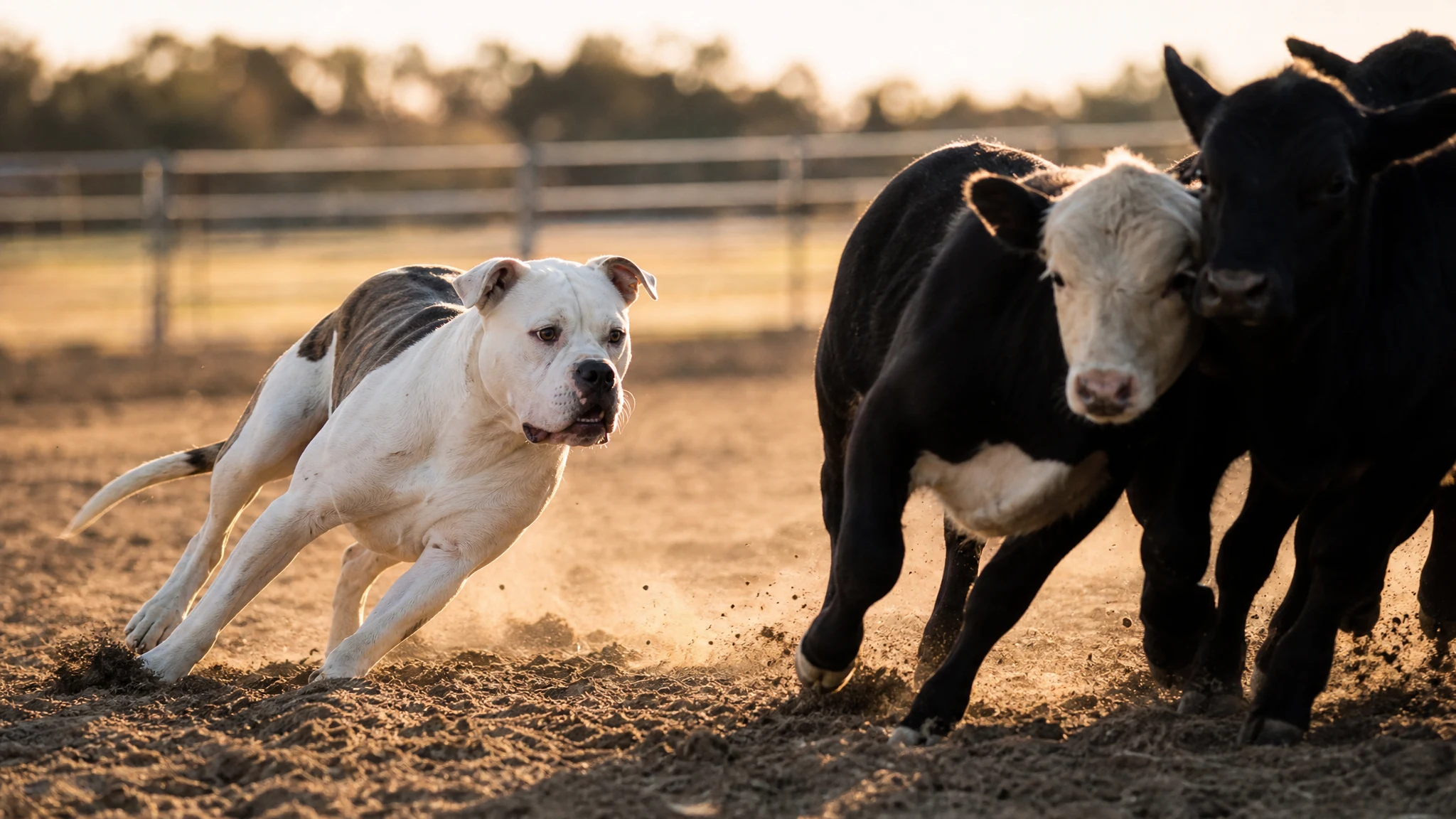
The American Bulldog was not bred to nap on a sofa all day, however well it does that on weekends. The United Kennel Club breed standard says the breed's original purpose was farm work: driving and catching cattle and guarding property. A dog with that history tends to be happiest when it has something useful to do.
This guide shows you how to turn that history into a daily routine. You will learn what the breed's working roles were, how to choose an activity, how to start safely, and what to avoid. It is written for a pet owner, not a farmer, so most of it is about giving a family dog a job it can enjoy.
What the breed was built to do
Wikipedia describes the American Bulldog's ancestors as working bulldogs brought to the British North American colonies. It lists the breed's working roles as farm guardian, stock dog and catch dog. The UKC standard describes the original purpose as driving and catching cattle and guarding property.
The UKC places the American Bulldog in its Guardian Dog Group and says it recognized the breed on January 1, 1999. The same standard describes the temperament as a gentle, loving family companion. That mix matters. A working past does not mean a dog is hard or harsh at home.
Individual dogs vary. Some will love physical games and some will prefer a calm sniffing walk. Let your own dog show you what it enjoys.
What the sources say about sports
I could not confirm a list of American Bulldog sports from an official breed source. The sources I relied on describe working roles, not competition events. Wikipedia says the American Bulldog entered the American Kennel Club Foundation Stock Service in November 2019, which means the breed is not yet registerable with the AKC in the usual way.
Because of that, check directly with the AKC, the UKC and any breed club near you to learn which events accept an American Bulldog and what registration or participation papers they ask for. Rules differ from one organization to the next, and they change.
Dog sports for American Bulldogs are therefore something to confirm with the organizer, not assume. A local training club can often tell you in one phone call whether a class is open to your dog.
Materials you will need
- A well-fitted flat collar or a back-clip harness, plus a standard leash. Avoid shock, prong and choke collars. They conflict with the humane, reward-based approach recommended by the American Veterinary Society of Animal Behavior (AVSAB).
- Small, soft treats your dog loves, cut to pea size so you can reward many times in a session.
- A favorite tug toy or ball for dogs that value play more than food.
- A long line of about 15 to 30 feet for practicing recall in open areas.
- Fresh water and a shaded spot. Hill's Pet notes sunburn on pink skin as a concern for the breed, so plan for shade and ask your veterinarian about sun protection.
- A notebook for tracking what your dog enjoyed and how it recovered afterward.
Step-by-step: choosing and starting an activity
Step 1: Start with a veterinary check
Hill's Pet lists hip and elbow dysplasia among the health issues seen in the breed. It also says an American Bulldog's bones and joints can take up to 18 months to fully mature. Before you begin any demanding activity, ask your veterinarian whether your dog is ready and what limits make sense for its age.
Only a veterinarian can assess your dog's joints. If you have a puppy, ask specifically about jumping, long runs and hard surfaces while the body is still growing.
Step 2: Build the basics first
Every sport and job rests on a few simple skills: sit, down, a reliable recall, loose-leash walking and settling on a mat. The Drake Center for Veterinary Care describes the breed as eager to please and easy to train, which is a good sign for learning these skills. Treat that as a general description, not a promise about your dog.
If you are still working on foundations, begin with our complete American Bulldog training guide and come back to this page when your dog can focus around mild distractions.
Step 3: Socialize before you specialize
Hill's Pet advises building control through early socialization and neutral exposure rather than suppression. The Drake Center warns that unsocialized dogs can become aggressive as adults and describes the breed as territorial. It also says American Bulldogs may not get along with other dogs, especially dogs of the same gender.
For a sport or class setting, that means calm, planned exposure to new people, places, sounds and dogs, with plenty of distance and treats at first. Reward calm behavior from a comfortable distance. Move closer only as your dog stays relaxed.
Step 4: Meet the daily exercise baseline
Hill's Pet says the breed needs about 60 minutes or more of physical and mental activity daily. A job or sport can fill part of that time, but it is not a substitute for everyday walks, play and rest.
Mix physical and mental work. A short training session with a few new cues can tire a dog out as much as a long walk. Split the time across the day and keep a rest day when your dog seems sore or flat.
Step 5: Pick an activity that fits the breed's history
Use the three working roles as a guide to what your dog may enjoy:
- Guardian roles. The breed's guarding history suggests a dog that notices its surroundings. At home, channel this with a "place" cue and a reward for calm behavior when visitors arrive. Teach the dog to look to you instead of rehearsing alarm or confrontation. Do not encourage aggression or train a dog to attack. Territorial behavior needs careful, humane management.
- Stock and driving work. The breed drove cattle on farms. If you live near working farms and want to try stock work, contact an experienced livestock handler or a local stock-dog club and ask whether they take American Bulldogs and how they introduce a new dog. Never put an untrained dog in with animals on your own.
- Catching and pulling-style play. The catch-dog role is the part of the history that most often turns into fetch, tug and flirt-pole games. Keep these controlled and rule-based, with a clear "drop it" and a cue to start and stop.
For organized competition, go back to the earlier point: contact the registries and clubs to learn which events are open to your dog.
Step 6: Find a local club or class
Look for an all-breed training club, a dog sports facility or a breed-specific group in your region. Visit first without your dog if the club allows it. Watch how the instructors handle nervous or pushy dogs.
Good signs include small classes, treats and toys as rewards, and instructors who explain why they teach each step. Walk away from any class that relies on pain, fear or force. Those methods go against AVSAB guidance and can make a territorial or tense dog worse.
Ask each club directly about:
- Whether dogs must be registered with a particular organization.
- How they separate dogs that do not get along.
- What vaccination or health records they require.
- Whether you can do a trial class or observe first.
Step 7: Keep sessions short and positive
Aim for 5 to 10 minutes of focused work, then a break. End while your dog is still keen. Reward often at the start, then slowly ask for a little more before the treat arrives.
Watch for signs of stress, such as lip licking, turning away, heavy panting out of proportion to the work, or refusing treats. If you see them, make the task easier or stop.
Step 8: Build up slowly and review
Increase duration, distance and distractions one at a time, never all at once. Keep notes after each session. If your dog limps, is stiff the next morning or seems reluctant to move, pause and call your veterinarian. Do not try to diagnose it yourself, and never give medication or supplements without veterinary direction.
Tips that help
- Give the dog a start and stop signal. A word like "go play" and another like "all done" help a driven dog switch off.
- Train in the heat of the day rarely. Early morning and evening are gentler, and shade matters for pink skin.
- Use the dog's own rewards. If your dog loves a tug, make the tug the paycheck.
- Keep dog introductions controlled. Because the breed may not get along with other dogs, use parallel walking at a distance before any greeting, and skip greetings if either dog is tense.
- Practice rest. A dog that can lie quietly on a mat is easier to handle in any class.
Common mistakes to avoid
- Pushing a growing dog too hard. With joints that may take up to 18 months to mature, high-impact work too early is a risk. Ask your veterinarian for limits.
- Skipping socialization. The Drake Center notes that unsocialized dogs can become aggressive as adults. Plan exposure from the start.
- Treating guarding as a game. Do not encourage suspicion of strangers or bite work. Reward calm, neutral behavior.
- Assuming every event accepts the breed. Confirm eligibility with the organizer before you pay a fee or travel.
- Using harsh gear or corrections. Shock, prong and choke collars, alpha rolls and scruffing do not belong in training. AVSAB advises against dominance-based methods.
- Ignoring rest. Mental work is tiring too. Build in easy days.
What to expect
With steady, reward-based practice, many American Bulldogs may become more focused, easier to settle and better mannered around distractions. Some owners find that a regular job helps a restless dog feel more content at home.
Results depend on your dog's age, health, temperament and history, and on how consistent you are. Progress is rarely a straight line. Expect some weeks where your dog seems to forget everything. Go back a step, keep it fun and try again.
Your goal is not a trophy. It is a dog that has an outlet for its energy and a good working relationship with you.