Are American Bulldogs Easy to Train? Temperament and Trainability FAQ
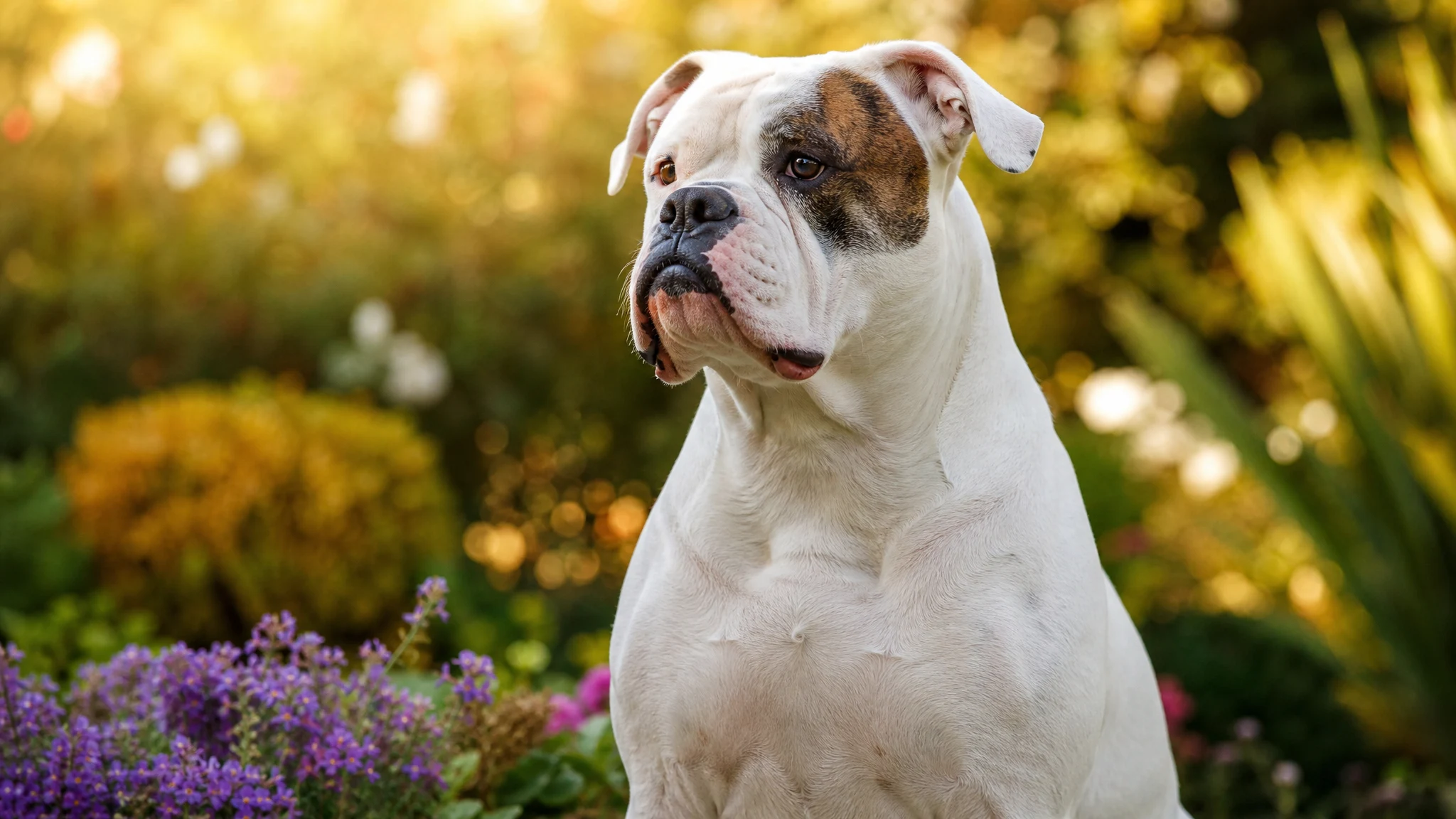
General training information. Every dog is an individual; for health or behavior concerns, see your veterinarian.
American Bulldogs are affectionate, sturdy farm dogs, and they can be a joy to live with. They are also big, strong and opinionated enough that training choices matter. This FAQ covers what the published sources say about American Bulldog trainability and temperament, and where you should check with a breed club or registry for the rest.
Individual dogs vary a lot, so treat everything here as a starting point, not a prediction.
Trainability and Smarts
Are American Bulldogs easy to train?
The Drake Center for Veterinary Care describes the breed as eager to please and easy to train. That is a veterinary clinic's wording, not a trait rating from a breed club or kennel club, so check the registry or parent club for their own ratings. Easy still means you have to put in the work. Our complete American Bulldog training guide walks through the basics step by step.
Are American Bulldogs smart?
None of the sources we rely on give the breed an intelligence ranking, so we will not invent one. What they do say is that the dog is eager to please, which is the quality that matters most when you teach cues. The United Kennel Club (UKC) notes that the breed's original purpose was driving and catching cattle and guarding property on farms, work that depended on cooperating with people.
What does American Bulldog trainability look like day to day?
Expect a dog that wants to work with you when the rewards are clear and the sessions are short. Practice a few minutes at a time, end while the dog is still keen, and use food, praise or play as payment. A strong, heavy dog is much easier to teach when it chooses to do the right thing.
Are American Bulldogs stubborn?
The published sources we use do not label the breed stubborn. When any dog seems to ignore you, the cause is usually a distraction that is too big, a reward that is too small, or a cue that was never taught clearly. Lower the difficulty, raise the reward and try again.
What training methods work best?
Reward-based training, which is also the approach supported by the American Veterinary Society of Animal Behavior (AVSAB). You mark the behavior you want and pay for it. Shock, prong and choke collars, alpha rolls, scruffing and dominance methods are not part of good practice, and they put a powerful dog and its handler at risk.
When should training start?
Start the day the puppy comes home. Hill's Pet breed guide says to build control through early socialization and neutral exposure, not suppression. In practice that means calm, positive meetings with new people, places, sounds and surfaces from the start.
Temperament
What is the American Bulldog's temperament?
The UKC breed standard describes a gentle, loving family companion. That is the ideal the standard sets, and well-bred, well-raised dogs are meant to match it. Upbringing and socialization still shape the adult dog.
Are American Bulldogs good with children?
Hill's Pet describes the breed as patient with children when raised with them, and it recommends supervision always. A big, solid dog can knock over a toddler by accident, so teach children calm handling and never leave them alone together.
Do American Bulldogs get along with other dogs?
Not always. The Drake Center says the breed may not get along with other dogs, especially same-gender dogs. If you plan a multi-dog home, plan introductions carefully and talk to a reward-based trainer before you commit.
Are they territorial or protective?
The Drake Center lists territorial behavior among the breed's known challenges. The UKC places the breed in its Guardian Dog Group, which fits a history of guarding farm property. Teach visitors, fences and doorbells to mean something calm from puppyhood, and manage the gate and door.
Can a poorly socialized American Bulldog become aggressive?
The Drake Center warns that unsocialized dogs can become aggressive as adults. This is the strongest reason to take socialization seriously. If your dog already shows fear or aggression, contact your veterinarian and a qualified reward-based trainer, and do not try to fix it with force.
Do American Bulldogs bark a lot?
We could not find a published barking rating for the breed, so check with the UKC, a breed club or the breeder you are considering. Whatever the breed tendency, you can teach a quiet cue and reward calm behavior around triggers. Individual dogs differ.
Energy, Size and Growing Up
How much exercise does an American Bulldog need?
Hill's Pet says about 60 minutes or more of physical and mental activity daily. Mental work counts, so sniff walks, puzzle feeders and short training games all help. A bored bulldog tends to find its own entertainment, and you rarely like the results.
How big do they get, and does it matter for training?
The UKC standard gives mature males 22 to 27 inches and mature females 20 to 25 inches at the shoulder. Wikipedia lists weights of 60 to 119 pounds. A dog that size can pull you off your feet, so loose-leash walking, a solid sit for greetings and reliable recall are safety skills, not extras.
When is an American Bulldog fully grown?
Hill's Pet says bones and joints can take up to 18 months to fully mature. Ask your veterinarian how much jumping, running and hard exercise is right for a growing puppy. Keep training sessions on the mental side in the meantime.
Can health problems affect training?
They can. Hill's Pet lists hip and elbow dysplasia among the breed's common health issues, and Wikipedia and Wisdom Panel list others, including skin conditions. If your dog suddenly resists sitting, jumping or stairs, or seems uncomfortable, see your veterinarian before assuming it is a behavior problem.
Who the Breed Suits
Are American Bulldogs good for first-time owners?
It depends on the owner more than the label. The sources describe an eager-to-please dog, but also a large, territorial one that needs early socialization and may not accept other dogs. A first-time owner who commits to classes, supervision and consistent rewards can do well. One who wants a dog that needs no management may struggle.
What kind of home suits an American Bulldog?
Look for a household that can give about an hour of activity a day, a secure yard or fence, and steady socialization. Because same-gender dog conflict is a known challenge, think hard before adding a second dog of the same sex. The breed's farm-working origin in the United States, noted by the UKC and Wikipedia, is a reminder that these dogs were bred to have a job.
Common Myths
Myth: a guardian breed needs a harsh hand.
This one does real harm. Hill's Pet points owners toward socialization and neutral exposure instead of suppression, and AVSAB supports reward-based methods. Harsh corrections can make a strong dog more wary and more reactive.
Myth: an American Bulldog is just an English Bulldog.
They are separate breeds with different histories. Wikipedia traces the American Bulldog to working bulldogs brought to the British North American colonies and developed on American farms. Do not assume that the health tests, temperament notes or training advice for one breed apply to the other.
Myth: easy to train means it will train itself.
Eager to please is a head start, not a finished product. Without clear cues, consistent rewards and good socialization, a willing dog can still grow into an unmanageable adult. Plan for regular practice for the first two years.
Is the American Bulldog recognized by the AKC?
Wikipedia reports that the American Kennel Club added the breed to its Foundation Stock Service in November 2019, which is not full registration. The UKC says it recognized the breed on January 1, 1999. Check directly with the AKC, the UKC and any breed club for current status, trait ratings and recommended health screens.
Where to Go Next
If you are ready to start, read the complete guide to training an American Bulldog for cues, routines and socialization steps. Talk to your veterinarian about any health or behavior concern.